• Tentang UGM
  • Portal Akademik
  • Pusat TI
  • Perpustakaan
  • Penelitian
Universitas Gadjah Mada
  • About Us
    • About CRCS
    • Vision & Mission
    • People
      • Faculty Members and Lecturers
      • Staff Members
      • Students
      • Alumni
    • Facilities
    • Library
  • Master’s Program
    • Overview
    • Curriculum
    • Courses
    • Schedule
    • Admission
    • Scholarship
    • Accreditation and Certification
    • Academic Collaborations
      • Crossculture Religious Studies Summer School
      • Florida International University
    • Academic Documents
    • Student Satisfaction Survey
  • Article
    • Perspective
    • Book Review
    • Event Report
    • Class Journal
    • Interview
    • Wed Forum Report
    • Thesis Review
    • News
  • Publication
    • Reports
    • Books
    • Newsletter
    • Monthly Update
    • Infographic
  • Research
    • CRCS Researchs
    • Resource Center
  • Community Engagement
    • Film
      • Indonesian Pluralities
      • Our Land is the Sea
    • Wednesday Forum
    • ICIR
    • Amerta Movement
  • Beranda
  • Pos oleh
  • page. 118
Pos oleh :

Constitutional Court and the Ambiguity of "the Middle Way"

Wednesday Forum News Wednesday, 12 January 2011

wedforum zabLast December 22nd, 2010 was the last edition of CRCS-ICRS Wednesday Forum for the first semester of 2010. The speaker was the Director of the CRCS UGM, Dr. Zainal Abidin Bagir, whose presentation titled “Religious Freedom, Harmony and ‘the Middle Way’: Analysis of the Indonesian Constitutional Court’s 2010 Decision on the Law on Defamation of Religion”.


Starting from an analysis written by CRCS UGM team of which Zainal Abidin was one of team members, they proposed the analysis as a consideration of the Constitutional Court (MK) decision in last April about the Religious Defamation Law (Law No. 1/PNPS/1965). Some NGOs and figures applied for judicial review of that law to the Constitutional Court. For this reason, before making a decision, the Court received considerations from all parties, including CRCS UGM.
Mahkamah Konstitusi dan Ambiguitas "Jalan Tengah"

Berita Wednesday Forum Wednesday, 12 January 2011

wedforum zabWednesday Forum CRCS-ICRS 22 Desember lalu adalah edisi terakhir diskusi mingguan ini untuk semester ganjil 2010. Yang menjadi pembicara kali ini adalah direktur CRCS UGM Dr. Zainal Abidin Bagir dengan presentasi berjudul “Religious Freedom, Harmony and ‘the Middle Way’: Analysis of the Indonesian Constitutional Court’s 2010 Decision on the Law on Defamation of Religion.

Berawal dari sebuah analisa yang ditulis oleh tim CRCS UGM, Zainal Abidin adalah salah satu di antaranya, sebagai pertimbangan atas keputusan Mahkamah Konsitusi (MK) bulan april lalu mengenai Undang-undang Penodaan Agama (UU Nomor 1/PNPS/1965). Beberapa LSM dan tokoh mengajukan permohonan uji materi atas undang-undang tersebut kepada MK. Untuk itulah, sebelum mengambil keputusan, MK menerima pertimbangan dari semua pihak, termasuk CRCS UGM.

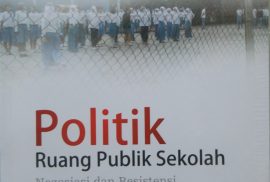
Politik Ruang Publik Sekolah

Bedah Buku Saturday, 1 January 2011

DSC_0035Salah satu perkembangan setelah Reformasi adalah terbukanya ruang-ruang yang lebih luas untuk ekspresi keberagaman. Ini benar termasuk di sekolah-sekolah umum. Buku ini melihat bagaimana sekolah sebagai ruang publik yang bebas untuk semua golongan siswa, kini hendak dan sebagian telah ditafsirkan dan dibentuk berdasarkan paham dan kepentingan satu golongan saja.

Buku yang diangkat dari penelitian yang dilakukan di tiga SMUN di Yogyakarta ini menelusuri praktik dominasi ruang publik itu dan dampaknya, serta mengapa dan bagaimana dominasi itu ditandingi, dilawan, dipermainkan, dinegosiasi, dan dipertanyakan oleh para siswa sendiri. Praktik-praktik resistensi ini merupakan satu contoh pembelajaran pluralisme, yaitu dalam membangun ruang publik yang lebih terbuka, sehat, dan demokratis. Kajian ini juga diharapkan memperkaya kajian mengenai anak muda (youth studies) yang selama ini banyak mengabaikan fenomena yang berkaitan dan yang berada di lingkungan keagamaan.

New Pespectives on How Civil Society Negotiates with the State

Book Review Saturday, 1 January 2011

Endy Saputro

The downfall of the Suharto regime has symbolized the return of civic authority. It has increasingly punctuated by the implementation of decentralization of power at the local level. One striking evidence is the implementation of Pemilukada (local election), for which even though on the one hand is a result of the new democracy in Indonesia, yet on the other hand  it offer expensive “cost” and hardly success. According to Gerry van Klinken and Joshua Barker (2009), this phenomenon asserts that power is no longer centered on the state, but also regional, or even civil. They recommend that analysis of the state in post-Suharto era should no longer focus on institutions, but how the power-area and authorities outside the state operates. Modifying Joel S. Migdal’s term (2001), Indonesia is now entering the era of “state in Society”.

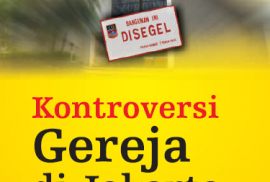
Kontroversi Gereja Di Jakarta

Bedah Buku Saturday, 1 January 2011

DSC_0029The Problem of building churches in Indonesia has been a long threat among the believers in Indonesia. There were many changes taken place both in the government and the state level in revising the rules towards the maintainence of religious diversity, but no transformation has taken place to end the issue. The constant fear is the tension exist among the people which leads toward escalating conflicts. The formation of People of Religious Forum after the reformation era and the joint effort initiative between the government and Ministerial Regulation of 2006, still did not solve the problem. There are many other factors that need to be thoroughly examined.

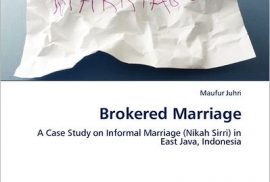
Brokered Marriage

Bedah Buku Saturday, 1 January 2011

777maufurEndi Saputro

Research coordinator of CRCS

Since two years ago, “nikah sirry or secret marriage” has been hotly debated in Indonesia. Interestingly, reactions come not only from various muslim scholars who argue for/against nikah sirry, but also from policy makers who sought to draft a bill on very the matter. Despite the disagreement, this book explains fluently, emploting religious perspective, that nikah sirry simply means “marriage which is not officially registered in KUA [Office of Religious Affairs), but it fullfils all the marriage requirements as prescribed in Islamic Law” (p.1). On the other hand, in the context of public sphere, the bill on nikah sirry aims to protect the future of the children resulted from nikah sirry. And it seems that this debate knows no end in sight.

1…116117118119120…190

Instagram

crcs_ugm

Sedang tidak baik-baik saja, kamu biasanya mencari Sedang tidak baik-baik saja, kamu biasanya mencari apa di internet?

Banyak anak muda hari ini menemukan ketenangan, nasihat, bahkan jawaban atas kegelisahan melalui media sosial, konten keagamaan, akun kesehatan mental, hingga AI chatbot. Namun, bagaimana sebenarnya pengalaman itu terjadi?
Kami sedang melakukan penelitian untuk memahami bagaimana generasi muda usia 10–24 tahun mencari informasi keagamaan maupun kesehatan mental saat menghadapi masa-masa sulit.
Jika kamu merasa topik ini dekat dengan pengalamanmu, kami mengundangmu menjadi responden.
Partisipasi bersifat sukarela dan seluruh jawaban dijaga kerahasiaannya.
Kamu bisa langsung kirim DM jawabanmu atau mau tanya-tanya dulu juga boleh.

Kami tunggu ya.
Katanja koeliah S2 itoe mahal? Eitss , djangan s Katanja  koeliah S2 itoe mahal? 
Eitss , djangan salah
Bersama keempat mahasiswa angkatan 2025, kita akan ngobrolin djoeroes-djoeroes djitoe mendapatkan beasiswa di CRCS UGM

Begitoe?
Before petroleum fueled the world, it fractured th Before petroleum fueled the world, it fractured the archipelago

The raise of the colonial petroleum industry in the Dutch East Indies was also the emergence of new spatial inequalities. Outer Java was not merely discovered as a resource zone. It was politically produced as an extractive territory through imperial concessions, colonial state-building, and global struggles over resource control.

Join us in this presentation on capitalism, oil, and the colonial fractures that continue to haunt the geography of modern Indonesia. We provide snacks and drinks, don't forget to bring your tumbler. This event is free and open to public.
M B G Satu kotak makan berisi nasi putih pulen seb M B G
Satu kotak makan berisi nasi putih pulen sebagai sumber karbohidrat utama, dimasak dari beras medium pilihan, air, sedikit garam, dan beberapa tetes minyak agar tidak cepat basi. Di sampingnya terdapat ayam semur kecap, dibuat dari potongan daging ayam, bawang merah, bawang putih, kecap manis, daun salam, lengkuas, garam, dan sedikit gula sehingga memberi asupan protein hewani yang cukup untuk pertumbuhan. Sebagai pendamping lauk utama, disediakan tempe orek manis gurih dari tempe iris tipis, bawang merah, bawang putih, cabai, kecap, dan gula merah. Tempe ini berfungsi menambah protein nabati sekaligus membuat kotak makan tampak lebih penuh, sebab protein memang sering lebih meyakinkan bila hadir rangkap dua. Untuk unsur sayuran, ada tumis wortel dan buncis yang dimasak dari wortel segar, buncis, sedikit kol, bawang putih, garam, merica, dan minyak sayur. Warna oranye-hijau pada sayur ini penting: bukan hanya untuk vitamin A dan serat, tetapi juga agar foto dokumentasi tidak terlihat terlalu pucat.Sebagai pelengkap vitamin alami, satu buah pisang atau sepotong pepaya matang diletakkan di sudut kotak. Buah dipilih yang murah, tahan banting, tidak gampang memar, dan cukup fotogenik ketika dibagikan massal. Terakhir, ditambahkan susu UHT kotak kecil berbahan susu sapi, gula, dan fortifikasi vitamin, atau kadang telur rebus utuh sebagai penutup protein tambahan.

Berbuih-buih seperti pelaksanaannya ...
Follow on Instagram

Twitter

Tweets by crcsugm

Universitas Gadjah Mada

Gedung Sekolah Pascasarjana UGM, 3rd Floor
Jl. Teknika Utara, Pogung, Yogyakarta, 55284
Email address: crcs@ugm.ac.id


© CRCS - Universitas Gadjah Mada

KEBIJAKAN PRIVASI/PRIVACY POLICY