• Tentang UGM
  • Portal Akademik
  • Pusat TI
  • Perpustakaan
  • Penelitian
Universitas Gadjah Mada
  • About Us
    • About CRCS
    • Vision & Mission
    • People
      • Faculty Members and Lecturers
      • Staff Members
      • Students
      • Alumni
    • Facilities
    • Library
  • Master’s Program
    • Overview
    • Curriculum
    • Courses
    • Schedule
    • Admission
    • Scholarship
    • Accreditation and Certification
    • Academic Collaborations
      • Crossculture Religious Studies Summer School
      • Florida International University
    • Academic Documents
    • Student Satisfaction Survey
  • Article
    • Perspective
    • Book Review
    • Event Report
    • Class Journal
    • Interview
    • Wed Forum Report
    • Thesis Review
    • News
  • Publication
    • Reports
    • Books
    • Newsletter
    • Monthly Update
    • Infographic
  • Research
    • CRCS Researchs
    • Resource Center
  • Community Engagement
    • Film
      • Indonesian Pluralities
      • Our Land is the Sea
    • Wednesday Forum
    • ICIR
    • Amerta Movement
  • Beranda
  • Pos oleh
  • page. 78
Pos oleh :

Bali's Ritual Economy

Artikel Monday, 19 March 2012

I Made Arsana | CRCS

“As Balinese, we have many responsibilities. We have traditions. We have to hold rituals. We have to make offerings. But it’s only if we have money that these responsibilities become easy to bear.” – A 50-year-old Balinese man from the village of Tampaksiring

Few visitors to Bali fail to witness the colorful religious rituals for which the island is famous. Cremation ceremonies and temple anniversaries have become tourist attractions and postcard images. Tickets are sold to the “last ceremony of its kind” and the “biggest ritual of the decade.” Even those tourists who come not for the culture but for the sun, sea and surf encounter ritual in the form of daily offerings to the gods and demons placed on the ground in front of art shops and cafés. Very few visitors, however, understand the economy behind ritual in Bali and the huge investments of money, time and intensive labor needed to fuel it.

Wed Forum 21 Maret: Wajah Kehidupan Beragama di Indonesia

Berita Wednesday Forum Monday, 19 March 2012

Wednesday forum is a weekly public discussion on various topics of religion and culture organized by CRCS and Indonesian Consortium for Religious Studies (ICRS). The forum is held every Wednesday at 12.30 – 2.30 PM in room 306 (3rd floor) of UGM graduate school building. Since 2002 many scholars, students, and researchers worldwide have presented their papers or on-going research in this forum.


Anyone who wants to make a presentation in this forum should fill out the Wedforum-form and send it to wednesdayforum@yahoo.com and crcs@ugm.ac.id.

Gerakan Kristen Mennonite di Indonesia

Berita Wednesday Forum Wednesday, 14 March 2012

Jeanne Zimmerly Jantzi

Konservatif sekaligus inklusif. Demikian ungkapan yang layak disematkan kepada komunitas Kristen Mennonite yang mempraktekkan ajaran Anabaptisme. Hal ini muncul dalam kesimpulan buku “Among The Believers: Kisah Hidup Seorang Muslim bersama Komunitas Mennonite Amerika” karangan Sumanto Al-Qurtubi, akademisi muslim Indonesia yang pada tahun 2005 hingga 2007 berinteraksi dengan kaum Mennonite Amerika. Kesimpulan Sumanto ini dibenarkan oleh Jeanne Zimmerly Jantzi, aktivis Mennonite Central Commitee (MCC) yang hadir sebagai pembicara dalam Wednesday Forum CRCS-ICRS 7 Maret 2012 lalu.

Values, Empiricism and the Construction of Anthropological Knowledge

Artikel Tuesday, 13 March 2012

Mark Woodward

Center for the Study of Religion and Conflict, Arizona State University

Center for Religious and Cross-Cultural Studies, Gadjah Mada University

Prof. Dr. Mark Woodward 

The organizers of this conference have asked us all to reflect on the role that values play in scientific research. There are at least two ways to address this issue. How one choses to respond, depends, of course, on how one interprets the question. It can be understood as a question about epistemology. If the question is about epistemology, it calls for an abstract response that would wind its way through the intellectual maze of debates concerning the distinction between scientific and interpretative approaches in the human sciences. If the question is about the conduct of research, it leads in another, equally complicated, and far more personal direction. Put somewhat differently my question about the question is: “Do you mean social science research in general, or the way I go about doing it???” To respond to the first question is take an intellectual position. To answer the second is also to take an intellectual position, but requires more reflection on what motivates, not just research procedures, but more general and far more personal question of why I do the things I do, and what drives me to ask the sorts of questions that I do. I study religion, politics and all too often, conflict. That complicates matters further because it is difficult for me to imagine not having person commitments or biases, depending on how one puts it, about these questions.

Endy M. Bayuni: Kebebasan Media di tengah Konservatisme dan Konflik Agama

Wawancara Monday, 12 March 2012

Endy M. Bayuni

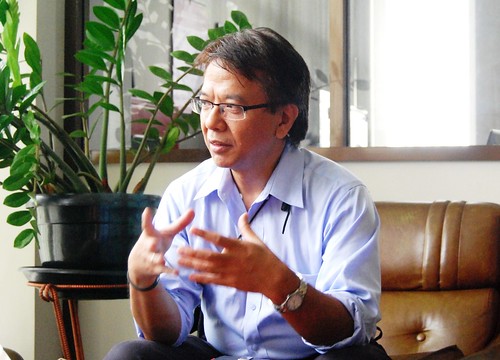
Konstelasi kebebasan media pasca Orde Baru menunjukkan berbagai tren yang menarik untuk dicermati. Di antaranya adalah keterbukaan media untuk meliput konflik-konflik SARA dan menguatnya kecenderungan konservatif masyarakat Indonesia. Di sela-sela kunjungannya di CRCS UGM untuk mengisi Workshop “Penulisan Jurnalistik dan Akademik di Media Online” serta Wednesday Forum “Religion and Media”, Endy M. Bayuni (Editor Senior harian berbahasa Inggris terkemuka di Indonesia, The Jakarta Post) menyempatkan diri untuk berbincang-bincang dengan reporter kami, Khoirul Anam. Berikut cuplikan interview yang dilakukan pada Rabu, 22 Februari 2012 ini:

WedForum March 14th: Charity Activism and the Increasing Visibility of Indonesia

Berita Wednesday Forum Monday, 12 March 2012


Wednesday forum is a weekly public discussion on various topics of religion and culture organized by CRCS and Indonesian Consortium for Religious Studies (ICRS). The forum is held every Wednesday at 12.30 – 2.30 PM in room 306 (3rd floor) of UGM graduate school building. Since 2002 many scholars, students, and researchers worldwide have presented their papers or on-going research in this forum.


Anyone who wants to make a presentation in this forum should fill out the Wedforum-form and send it to wednesdayforum@yahoo.com and crcs@ugm.ac.id.

1…7677787980…190

Instagram

crcs_ugm

Sedang tidak baik-baik saja, kamu biasanya mencari Sedang tidak baik-baik saja, kamu biasanya mencari apa di internet?

Banyak anak muda hari ini menemukan ketenangan, nasihat, bahkan jawaban atas kegelisahan melalui media sosial, konten keagamaan, akun kesehatan mental, hingga AI chatbot. Namun, bagaimana sebenarnya pengalaman itu terjadi?
Kami sedang melakukan penelitian untuk memahami bagaimana generasi muda usia 10–24 tahun mencari informasi keagamaan maupun kesehatan mental saat menghadapi masa-masa sulit.
Jika kamu merasa topik ini dekat dengan pengalamanmu, kami mengundangmu menjadi responden.
Partisipasi bersifat sukarela dan seluruh jawaban dijaga kerahasiaannya.
Kamu bisa langsung kirim DM jawabanmu atau mau tanya-tanya dulu juga boleh.

Kami tunggu ya.
Katanja koeliah S2 itoe mahal? Eitss , djangan s Katanja  koeliah S2 itoe mahal? 
Eitss , djangan salah
Bersama keempat mahasiswa angkatan 2025, kita akan ngobrolin djoeroes-djoeroes djitoe mendapatkan beasiswa di CRCS UGM

Begitoe?
Before petroleum fueled the world, it fractured th Before petroleum fueled the world, it fractured the archipelago

The raise of the colonial petroleum industry in the Dutch East Indies was also the emergence of new spatial inequalities. Outer Java was not merely discovered as a resource zone. It was politically produced as an extractive territory through imperial concessions, colonial state-building, and global struggles over resource control.

Join us in this presentation on capitalism, oil, and the colonial fractures that continue to haunt the geography of modern Indonesia. We provide snacks and drinks, don't forget to bring your tumbler. This event is free and open to public.
M B G Satu kotak makan berisi nasi putih pulen seb M B G
Satu kotak makan berisi nasi putih pulen sebagai sumber karbohidrat utama, dimasak dari beras medium pilihan, air, sedikit garam, dan beberapa tetes minyak agar tidak cepat basi. Di sampingnya terdapat ayam semur kecap, dibuat dari potongan daging ayam, bawang merah, bawang putih, kecap manis, daun salam, lengkuas, garam, dan sedikit gula sehingga memberi asupan protein hewani yang cukup untuk pertumbuhan. Sebagai pendamping lauk utama, disediakan tempe orek manis gurih dari tempe iris tipis, bawang merah, bawang putih, cabai, kecap, dan gula merah. Tempe ini berfungsi menambah protein nabati sekaligus membuat kotak makan tampak lebih penuh, sebab protein memang sering lebih meyakinkan bila hadir rangkap dua. Untuk unsur sayuran, ada tumis wortel dan buncis yang dimasak dari wortel segar, buncis, sedikit kol, bawang putih, garam, merica, dan minyak sayur. Warna oranye-hijau pada sayur ini penting: bukan hanya untuk vitamin A dan serat, tetapi juga agar foto dokumentasi tidak terlihat terlalu pucat.Sebagai pelengkap vitamin alami, satu buah pisang atau sepotong pepaya matang diletakkan di sudut kotak. Buah dipilih yang murah, tahan banting, tidak gampang memar, dan cukup fotogenik ketika dibagikan massal. Terakhir, ditambahkan susu UHT kotak kecil berbahan susu sapi, gula, dan fortifikasi vitamin, atau kadang telur rebus utuh sebagai penutup protein tambahan.

Berbuih-buih seperti pelaksanaannya ...
Follow on Instagram

Twitter

Tweets by crcsugm

Universitas Gadjah Mada

Gedung Sekolah Pascasarjana UGM, 3rd Floor
Jl. Teknika Utara, Pogung, Yogyakarta, 55284
Email address: crcs@ugm.ac.id


© CRCS - Universitas Gadjah Mada

KEBIJAKAN PRIVASI/PRIVACY POLICY