M Rizal Abdi | CRCS | News
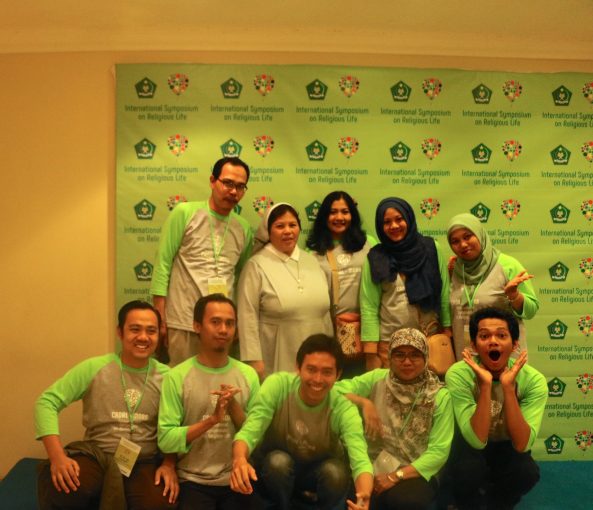
 Nowadays, religion frequently becomes a major source of violence, exclusion and misunderstanding. Almost every week, conflicts among religious people or institutions appear in the headlines. However, religion can also be catalyst for peace and harmony, reconciliation and social justice. At the same time, the state’s fundamental position in matters of religious policies also plays a significant role in managing the diversity. With these concerns in mind, the Centre for Research and Development of Religious Life (CRDRL) of The Ministry of Religious Affairs of the Republic of Indonesia (MORA) held “International Symposium of Religious Life (ISRL) 2016: Managing Diversity, Fostering Harmony” at Sari Pan Pacific Hotel, Jakarta on 5-7 October 2016. Bringing together researchers, activists, policy makers, and scholars of religious studies, the symposium was expected to offer opportunities for new ideas in developing religious studies as well as a variety of new formats for achieving harmonious religious life in plural society. “As the Ministry of Religious Affairs, we hope that this symposium might give us recommendations for implementing the vision of Indonesia diversity,” said Prof. Dr. Phil. Amin Kamaruddin, General Director of Islamic Education, representing the Minister of Religious Affairs.
Following keynote addresses by Prof. Azyumardi Azra (UIN Syarif Hidayatullah, Jakarta), Prof. Robert W. Hefner (Boston University), and Prof. Gamal Farouq Jibril (Al-Azhar University, Cairo) who presented their fruitful insights in the plenary session, more than 100 participants from various backgrounds and countries attended the forum. The participants were rigorously selected based on their abstracts from hundreds of submissions from Indonesia and around the region. Three current CRCS students were invited to become participants in this forum. Azis Anwar Fachruddin from the 2014 batch delivered a paper entitled “Indonesia’s Indigenous Belief and Modern Construction of Religion” which challenged the paradigm of “world religions” in constructing the religion definition in Indonesia. The paper by Ali Ja’far from the 2015 batch was entitled “Promoting Religious Tolerance through Religious Tourism: Managing Religious and Ethno-Political Conflict in Tuban.” It gives alternative perspective of tourism as “dialog of hand” (practical measures) in reconciliation of ethno-religious and political conflicts. M Rizal Abdi from the 2015 batch discussed the issue on negotiation of space and place in pilgrimage studies when he presented his ongoing research entitled, “Tembayat Pilgrimage as Space of Harmony: Exchanging Symbols, Negotiating Spaces.”
 In addition to the three current students, seven CRCS alumni also took part in the symposium: Achmad Zainal Arifin (2000), lecturer in Sociology program in UIN Sunan Kalijaga; Erik Sabti Rahmawati (2001), lecturer in Syariah Faculty UIN Maulana Malik Ibrahim; Ubed Abdillah (2001), lecturer of General Education in Buddhi Dharma University Tangerang; Elis Z. Anis (2001), Financial Development Executive at the Indonesian Consortium for Religious Studies (ICRS); Al Khanif (2004), lecturer and director of Research Institute of Human Right, Faculty of Law, Jember University Indonesia; A. Syamsu Madyan (2004), lecturer of Islamic Studies at the Graduate School of Unisma Malang; and Achmad Fawaid (2012), a lecturer of IAI Nurul Jadid Paiton Probolinggo.
“The issues that were elaborated on in plenary and panel sessions looks like extended versions of our daily discussions in the classroom at CRCS,” said Jafar. At the same time, the symposium also helped student in finding cutting-edge discourse on religious studies research. “The discussants were quite critical but the discussions enriched the research questions as well as refined my analysis,” Abdi remarked after his presentation. The participation of ten CRCS students and alumni in this international symposium not only shows CRCS’s remarkable academic track records in religious studies but also demonstrates the continuous efforts of CRCS’s big family in building bridges in the world of diversity.