Tentang macam-macam kelompok Muslim di Myanmar, isu kewarganegaraan, konflik etnoreligius, dan munculnya gerakan ekstrem yang makin menajamkan perseteruan Buddhis-Muslim. Bacaan pengantar dari Prof. Imtiyaz Yusuf.

Tentang macam-macam kelompok Muslim di Myanmar, isu kewarganegaraan, konflik etnoreligius, dan munculnya gerakan ekstrem yang makin menajamkan perseteruan Buddhis-Muslim. Bacaan pengantar dari Prof. Imtiyaz Yusuf.
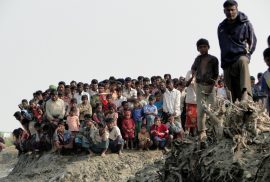
Bagaimana hubungan agama dan kekerasan dalam tragedi Rohingya? Refleksi mahasiswa dari matakuliah Religion, Violence and Peacebuiliding di CRCS.
Suhadi | CRCS | Opinion
 As i observe, the discipline of religious studies that is growing in Southeast Asian countries nowadays has several characteristics that make it different from how religion has been studied until now. First, it goes beyond theological approaches and stresses religious practice in relation to society, politics and culture. Second, it is part of the response to social and political issues outside the academy, such as inter-religious conflict, the absence of the freedom of religion, gender inequality, social injustice, etc. For these reasons, I am interested to explore the emergence of this discipline in the context of Southeast Asia.
I presented these ideas about the emerging discipline of religious studies in the Southeast Asian context at the research seminar entitled “Making Southeast Asia and Beyond” at the Faculty of Liberal Arts, Thammasat University, Bangkok, Thailand, in January 2016.
Southeast Asia is home to communities of believers in the world’s major religions and traditions, in addition to various indigenous religions and other smaller world religions. Major groups by percentage of the Southeast Asian population are Muslims (36.77%), Buddhist (26.78%), Christians (22.06 %), and ethno-religionists (4.61 %), according to www.thearda.com. Others include Hindus, Confucians, and members of other faiths.
The significance of religions in Southeast Asia is not only in their strong presence in the daily life of society, but also in the profound role they play in various aspects of political, economic, and social life of the Southeast Asian peoples. In previous decades, it was predicted that due to the strong modernization of Southeast Asia –like in other parts of the world– religion would disappear from public life. However, the turn of the twenty-first century has seen a resurgence in religious activity. Despite predictions of its decline, religion has revived (and, some scholars add, become radicalized) around the globe, including in Southeast Asia. It has not died out in our modern world, as secularization theory anticipated, but, on the contrary, it is blossoming. Some scholars even call the 21st century “God’s century” (Toft et al. 2011).
Religious issues occupy a strategic, challenging position in the political, economic, and social life of Southeast Asian countries. Intra- and interreligious tension and conflict arise frequently in the region and, to varying degrees, persecution based on religious identity has been reported in some ASEAN member states (Human Rights Resources Center at UI Jakarta 2015). The conflict between Buddhist majority groups in Myanmar supported by the government and the Muslim minority Rohingya has led to the displacement of Rohingya refugees to camps inside Myanmar and to other other ASEAN countries (Suaedy& Hafiz 2015). These problems show the complexity of identity issue, including religious identity issue, in Southeast Asian countries and beyond. Acts of religious inspired terrorism have been making the problems more complex.
Meanwhile, as shown by the consensus of the ASEAN Economic Community which was launched this January 2016, the concerns of ASEAN leaders have focussed mostly (to not say merely) on economic interests. We do have the ASEAN Human Rights Declaration which pays attention to civil, political, and cultural rights and the people’sright to peace, but it pays little attention to religious rights. The ASEAN Intergovernmental Commission on Human Rights advocates for the rights of migrants, women, children, and disabled people, but had done little in regards to religious rights. It seems the actors try to avoid religious issues.
Thus, it is necessary to ask such questions as where is the place for talking about inter/ intra religious issues in the public life since religion isin fact part of public discourse? Who will initiate opening that discussion? What is the role of public (non-theological, non-religious vocational) universities in this region on these issues?
In this article, I will try to answer the last question based on the assumption that the answer must indirectly respond to the preceding questions. I look at how public universities in Southeast Asian countries are initiating the academic study of religions during the last two decades by opening centers or departments with the title religious studies or similar names.
Of course, religions have long been studied widely in universities in the region, usually from the perspective of theology or as the (social) science of religion within such disciplines as sociology, anthropology, psychology, and so on. It is important to differentiate among the three positions: theology, (social) science of religion, and religious studies, which tends to be interdisciplinary in its approach. My main concern here is religious studies.
Let us come to see the institutional development of religious studies in several universities in Southeast Asia. I focus on three institutions, among others as examples. First,the College of Religious Studies in Mahidol University in Thailand was established in 1999 and dedicated to “the study and research in the field of religious studies [that]fosters mutual understanding, cooperation, and respect among people of different religious traditions”. A strong International Center for Buddhism and Islamis part of that college. (http://www.crs.mahidol.ac.th/).
Second, at GadjahMada University Indonesia, the Center for Religious and Cross-cultural Studies (CRCS) interdisciplinary master program focusing on religious studies was established in 2000. It has three main areas of study: inter-religious relations; religion, culture and nature; and religion and public life (crcs.ugm.ac.id).
Third, it is a little surprising that in 2014 Nanyang Technological University in Singapore also opened a master program entitled “Studies in Inter-Religious Relations in Plural Societies” within its Rajaratnam School of International Studies (RSIS). It is mentioned in its profile that it “aims to study various models of how religious communities develop their teachings to meet the contemporary challenges of living in plural societies. It will also deepen the study of inter-religious relations, formulate models for the positive role of religions in peace-building and produce knowledge to strengthen social ties between communities” (www.rsis.edu.sg/research/srp/).
These aforementioned institutions offer academic degrees in religious studies (BA, MA, and/ or PhD). The main character of religious studies as each defines it is strengthening inter-religious perspectives. In consequence, the religious studies approach draws directly or indirectly on comparative studies within religious diversity either as social context or as a primary concern of study. In this point we can see one major difference in perspective and positionality between religious studies and theology.
Thus, on one hand, it is in line with the duty of the public university to understand about diverse religions rather than to preachon behalf of one religion. In addition those institutions are engaged in peace movements and other activities related to diversity management in their respective societies. In this point, the religious studies perspective, by seeking to be impartial but not neutral, is different from that of the science of religion that usually –not always—strives to be neutral.
In conclusion, considering the awkwardness of public universities and other public bodies and authorities within ASEAN in ‘addressing’ religion, it is clear that it is time to look at religious studies as an alternative approach. Religious studies recognizes the significance of religion in Southeast Asian political, economic, and social life. Maybe it is not an over statement to say that the centers and departments of religious studies in Southeast Asian public universities –in cooperation with other disciplines– will be new players in relation to the management of religious diversity in the public life of Southeast Asia.
The writer is a lecturer at the Center for Religious and Cross-cultural Studies (CRCS),
Graduate School, GadjahMada University, Indonesia.
He can be reached at: suhadi_cholil@ugm.ac.id