• Tentang UGM
  • Portal Akademik
  • Pusat TI
  • Perpustakaan
  • Penelitian
Universitas Gadjah Mada
  • About Us
    • About CRCS
    • Vision & Mission
    • People
      • Faculty Members and Lecturers
      • Staff Members
      • Students
      • Alumni
    • Facilities
    • Library
  • Master’s Program
    • Overview
    • Curriculum
    • Courses
    • Schedule
    • Admission
    • Scholarship
    • Accreditation and Certification
    • Academic Collaborations
      • Crossculture Religious Studies Summer School
      • Florida International University
    • Academic Documents
    • Student Satisfaction Survey
  • Article
    • Perspective
    • Book Review
    • Event Report
    • Class Journal
    • Interview
    • Wed Forum Report
    • Thesis Review
    • News
  • Publication
    • Reports
    • Books
    • Newsletter
    • Monthly Update
    • Infographic
  • Research
    • CRCS Researchs
    • Resource Center
  • Community Engagement
    • Film
      • Indonesian Pluralities
      • Our Land is the Sea
    • Wednesday Forum
    • ICIR
    • Amerta Movement
  • Beranda
  • Yogyakarta
  • Yogyakarta
Arsip:

Yogyakarta

Ibadah Natal di Gereja-Gereja di Yogyakarta

Berita Wednesday, 26 December 2018

Esai foto dari ibadah dan perayaan Natal di GKJ, GPIB, GKI, dan HKBP Yogyakarta, 24 Desember 2018.

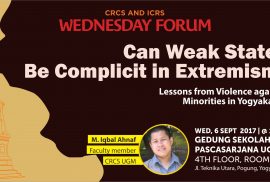
Can Weak States Be Complicit in Extremism?: Lessons from Violence against Minorities in Yogyakarta

HeadlineNewsWednesday Forum News Thursday, 31 August 2017

CRCS-ICRS Wednesday Forum, Sept 6, 2017. Speaker: Dr. Mohammad Iqbal Ahnaf.
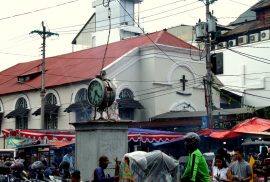
Vigilantism in Yogyakarta and its Context

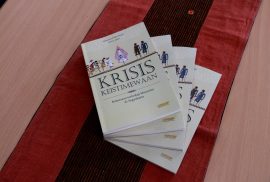
Book Review Monday, 17 July 2017

A review of the book "Crisis of Keistimewaan: Violence Toward Minorities in Yogyakarta" recently published by CRCS (2017).
Vigilantisme di Yogyakarta dan Konteksnya

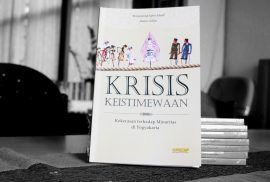
Book ReviewHeadlineNews Tuesday, 11 July 2017

Review buku Krisis Keistimewaan: Kekerasan terhadap Minoritas di Yogyakarta (CRCS 2017)
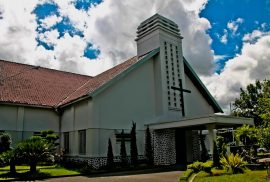
Gereja dan Perdamaian Lintas Agama di Yogyakarta

BeritaHeadlineNews Monday, 29 May 2017

“Gereja-gereja memahami perdamaian secara sempit, sekadar sebagai negative peace. Perdamaian dianggap tercapai apabila tidak ada konflik.”
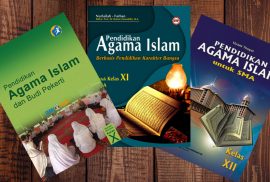
Changes in Islamic textbooks of Yogyakarta’s public high schools

HeadlineNewsWednesday Forum Report Thursday, 4 May 2017

Anang G Alfian | CRCS | Wednesday Forum Report

Some of the Islamic textbooks used in public high schools.

At the CRCS-ICRS Wednesday Forum on April 12th, 2107, Sawyer Martin French, a research fellow at the Institute for International Studies at the Faculty of Social and Political Sciences at Universitas Gadjah Mada, gave presentation on the government-mandated curricula of Islamic education in public high schools. He took several public high schools (Sekolah Menengah Atas, SMA) in the province of Yogyakarta, with the method of classroom observation, interviews with teachers, and student focus group discussions in a few schools. More importantly, he also presented his research on Islamic textbooks used in those high schools which he observed have undergone content changes.
In his presentation, French showed that each political period has a difference in the emphasis of the contents of the Islamic textbooks used in SMA. There are three political periods where curricula for Islamic education in SMA have evolved, from the 1994 curriculum, which was formed under the Suharto New Order’s regime; then replaced by the 2006 curriculum under the post-reformation period; and the latest, 2013 curriculum. French shows the content of the Islamic curricula has undergone several changes, three main of which are that related to tolerance, democracy and gender issues.
Sawyer Martin French

Regarding democracy, French mentioned an example of 1994 Islamic textbook mentioning the importance of “mushawarah” (lit. consultation to each other) as an Islamic teaching in managing Indonesian politics and governmental administrations. The 2003 textbook mentioned the importance of being a good citizen, meaning a democratic citizen, by further interpreting the meaning of mushawarah. This shows the change due to discourse on democracy generated by reformation. In the 2013 textbook, there is a reference to put more details of how Indonesia democracy should take the ideal shape, and that is to take the example set by the Medinan charter during the time of the Prophet.
Relating to tolerance, the textbooks show changes in the way Muslim should deal with other religions or Islamic sects. In the 1994 textbook, Pancasila was referred to as be the basis of harmony among religious communities while in the 2006 textbook, tolerance can be built along social matters but not along religious lines. The 2013 textbook mentioned that tolerance is a tool to unite the nation, but there are a few sentences which suggest intolerance against some Islamic sects, such as that some Sufi orders practice bid’ah or heretical rituals and that Shiites and Ahmadis are deviant and beyond the limit of tolerance.
As on gender issues, the dominant content of the 1994 textbook upholds the obligation of men as the leader of the family and women as the one who must be obedient to her husband. This was set as an example of a good family. In the 2013 textbook, the focus was more to a companionate marriage and mutual relationship. The notions of housewife and superiority of men which were mentioned in the previous textbooks are now gone and replaced by sentences suggesting a more equal relationship between the husband and the wife, though there is still an emphasis that, despite the same level, “their roles are different.”
*Anang G Alfian is CRCS student of the 2016 batch

12

Instagram

M B G Satu kotak makan berisi nasi putih pulen seb M B G
Satu kotak makan berisi nasi putih pulen sebagai sumber karbohidrat utama, dimasak dari beras medium pilihan, air, sedikit garam, dan beberapa tetes minyak agar tidak cepat basi. Di sampingnya terdapat ayam semur kecap, dibuat dari potongan daging ayam, bawang merah, bawang putih, kecap manis, daun salam, lengkuas, garam, dan sedikit gula sehingga memberi asupan protein hewani yang cukup untuk pertumbuhan. Sebagai pendamping lauk utama, disediakan tempe orek manis gurih dari tempe iris tipis, bawang merah, bawang putih, cabai, kecap, dan gula merah. Tempe ini berfungsi menambah protein nabati sekaligus membuat kotak makan tampak lebih penuh, sebab protein memang sering lebih meyakinkan bila hadir rangkap dua. Untuk unsur sayuran, ada tumis wortel dan buncis yang dimasak dari wortel segar, buncis, sedikit kol, bawang putih, garam, merica, dan minyak sayur. Warna oranye-hijau pada sayur ini penting: bukan hanya untuk vitamin A dan serat, tetapi juga agar foto dokumentasi tidak terlihat terlalu pucat.Sebagai pelengkap vitamin alami, satu buah pisang atau sepotong pepaya matang diletakkan di sudut kotak. Buah dipilih yang murah, tahan banting, tidak gampang memar, dan cukup fotogenik ketika dibagikan massal. Terakhir, ditambahkan susu UHT kotak kecil berbahan susu sapi, gula, dan fortifikasi vitamin, atau kadang telur rebus utuh sebagai penutup protein tambahan.

Berbuih-buih seperti pelaksanaannya ...
G U S Mulanya "gus" adalah panggilan untuk anak ki G U S
Mulanya "gus" adalah panggilan untuk anak kiai yang belum cukup pantas secara umur dan ilmu dipanggil sebagai kiai. Masih magang. Namun, tradisi itu sedikit goyang karena dua sosok: Gus Dur dan Gus Miek. Keduanya tentu sudah pantas menyandang gelar kiai, tetapi rupanya nama magang itu sudah kadung merasuk dan menubuh. Jadilah istilah gus naik pangkat di kalangan awam sebagai sebutan untuk pemuka agama kharismatik yang ndak kalah aji dengan kiai. Kini, gelar gus lagi-lagi goncang. Pasalnya, banyak sosok yang mengaku dan didaku sebagai gus. Parahnya, banyak orang tak lagi bertanya: siapa gurunya, siapa nasabnya, atau apa yang dibaca? Gus seolah menjadi lisensi untuk mengais gold dan glory dalam bisnis berjenama "agama". 

Simak sindiran @safinatul_aula atas fenomena gus-gusan yang kerap membuat kita mengelus empedu. Hanya di situs web crcs.
S U R G A Surga dan neraka memang dibuat sebagai a S U R G A
Surga dan neraka memang dibuat sebagai alat ukur dan wadah pemisah. Keberadaanya merupakan konsekuensi logis dari sebuah tarik ulur tentang baik dan buruk. Mereka yang dijanjikan surga patut bersenang hati. Namun, ada saat ketika keyakinan tentang keselamatan tidak lagi menenangkan. Mungkin persoalannya bukan siapa yang akan masuk surga, melainkan mengapa kita begitu sibuk memastikan orang lain tidak.
Berawal dari percakapan antah berantah, @safinatul_aula tengah berefleksi tentang nasib diri dan teman-temannya nanti. Simak refleksinya di situs web crcs.
Tensions around the Gulf of Hormuz are shaking glo Tensions around the Gulf of Hormuz are shaking global oil supply and accelerating the push for alternatives green energy. Geothermal is often framed as the answer. But whose “green” is it?
What if “green energy” isn’t always as green as it sounds?
Together with @honeyyymooooonnn we bring stories from communities on the frontlines of geothermal projects in Indonesia, where sustainability is debated, challenged, and reimagined. It is not just about resistance, but a different way of thinking about energy, justice, and our relationship with nature.

Join the discussion at UGM Graduate School building, 3rd floor. We provide snacks and drinks, don't forget to bring your tumbler. This event is free and open to public.
Follow on Instagram

Twitter

Tweets by crcsugm

Universitas Gadjah Mada

Gedung Sekolah Pascasarjana UGM, 3rd Floor
Jl. Teknika Utara, Pogung, Yogyakarta, 55284
Email address: crcs@ugm.ac.id


© CRCS - Universitas Gadjah Mada

KEBIJAKAN PRIVASI/PRIVACY POLICY