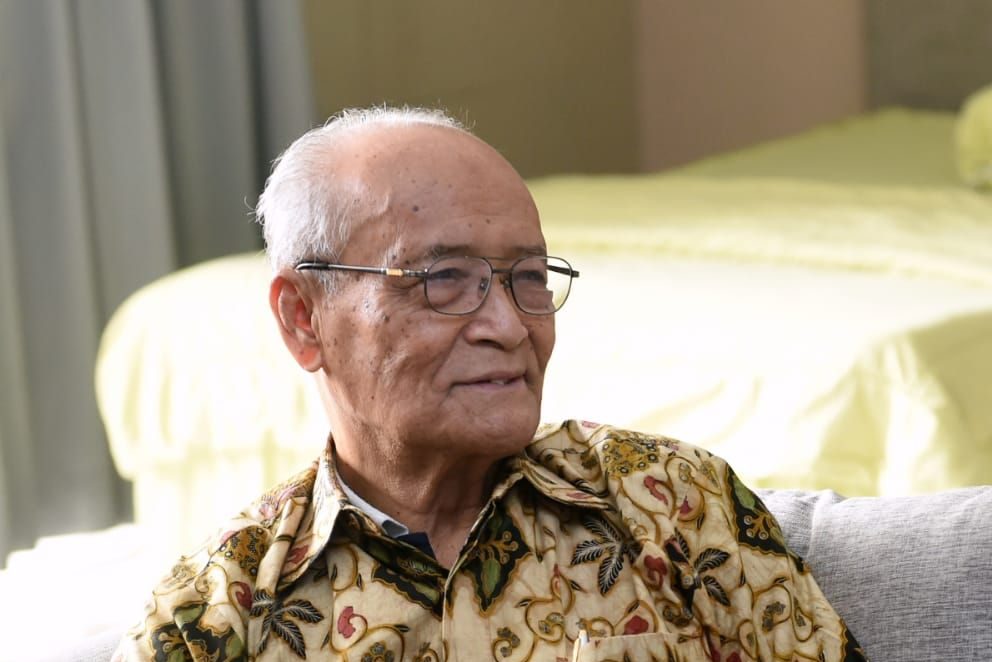
Does Indonesia have a strong basis for religious pluralism that is deeply rooted in its history? This question can help shape the way Indonesian people today imagine their national identity when dealing with religious diversity. To get a historian’s perspective, CRCS student Azis Anwar Fachrudin interviewed Professor Anthony Reid, distinguished historian of Southeast Asia and Professor Emeritus at the Australian National University, when he visited CRCS on February 24, 2016, and spoke at the CRCS-ICRS Wednesday Forum. Following his doctoral work at Cambridge University on the contest for power in northern Sumatra, Indonesia, in the late 19th century, he has written many books on the political and cultural history of the region, including The Contest for North Sumatra: Aceh, the Netherlands and Britain, 1858-98 (1969); The Indonesian National Revolution (1974); The Blood of the People: Revolution and the End of Traditional Rule in Northern Sumatra (1979); An Indonesian Frontier: Acehnese and other histories of Sumatra (2004); Imperial Alchemy: Nationalism and political identity in Southeast Asia (2010); and To Nation by Revolution: Indonesia in the 20th Century (2011); as well as works of historical synthesis, Southeast Asia in the Age of Commerce, c.1450-1680 (2 vols. 1988-93) and A History of Southeast Asia: Critical Crossroads (2015). He was the founding director of the Asia Research Institute (ARI) at the National University of Singapore (NUS). .
***
In some of your papers you argue that religious pluralism has long been rooted in Asian tradition or, more precisely, South, East, and Southeast Asian traditions. Does that mean that religious intolerance is a modern development? In other words, is it quite recent?
That is what I was attempting to say, to help in a sense legitimize diversity as an Asian tradition. There were examples of intolerance in Asia, in earlier times, but they were very minor in comparison with what happened in Europe and probably what happened in the Middle East.
If you can point out something essential to Asian tradition that has made it more tolerant toward religious diversity than Western tradition was, what would that be?
Perhaps, two things. One is a simple necessity that the Indian ocean was a place of great interactions between many kinds of people. Many of the traders were Muslims; most of the other people were not. Of course they interacted all the time. Nobody could imagine a homogenous situation. The trade was made to bring people together with different religions. This is just a basic fact of geographical condition. The other point is that Indic religion in general was very different from the Abrahamic in that it did not create boundaries around the faith and it did not generate a creed.
No concept of heresy?
Yes, no concept of heresy, because there was no concept of a single revelation that has to be defined and defended by the faithful. Indian religion was more about sacred places, different kinds of deities and forms of worship. It is inherently a more diverse system. In many of the Indic mystic traditions, including one that was very strongly practiced in Java, there was the idea that there is diversity but essentially truth must be one. This diversity that is obvious, as apparent in different practices, must fundamentaly be one. We don’t have to force the appearance or the lahir to conform to the batin. We must realize the oneness in some deeper level.
So, you agree with the thesis that Islam came to Nusantara in a more peaceful way than how it came to, for example, Africa or Europe?
Yes. I mean, there were religious warfares, but it came [to Nusantara] initially by trade, which must accomodate diversity.
The way Islam and Christianity formed an orthodoxy is different. The schism in Christianity happened mostly after the Council of Nicaea. In Islam it happened not long after the death of the Prophet Muhammad. Does this have an impact in the way Muslims and Christians reconcile their respective religion with modern values?
There were many schisms in Christianity. And like the Islamic schism, they all have something to do with political power. In Christianity it certainly was the Roman Empire that, when once it embraced Christianity, was calling Christian theologians to come up with some consensus and those who did not accept it would be considered heretical. Most of the people who did not accept were outside or removed from the Roman Empire. So, the empire enforced orthodoxy. Of course this idea of enforcing orthodoxy is not something inherent in the religion, but it definitily happened in both Christianity and Islam as they became the ally of the state.
But if we look at the last century there have been more movements within Islam that strive to establish an Islamic state or a caliphate than that in Christianity. Is there something in Islam distinct from Christianity with regard to this issue?
Well, the issue of religious tolerance and the separation of church and state was settled some time ago. At least since the French revolution, it became established that there has to be a difference between the state and religion. Religion could not be forced by the state. Of course there were still few states that try to enforce things like this. But basically, that was by then pretty settled. And that was much earlier established in America as a necessary way of dealing with diversity. But, while that was settled in Christianity, I think that has not been settled in the same way in Islam; I mean, the debate on how the relationship between religion and the state should work. And I suppose that the absence of any religious authority in Islam makes the relation with the state more salient. I mean, this issue of what state should do or whether the state is supposed to impose a single power of religious authority is still there.
Or, it has to do with some sort of doctrine in Christianity that says “render to Caesar the things that are Caesar’s, render to God the things that are God’s”?
I’m not theologically sure enough that that is the case. I know that there are words of Jesus that say don’t draw swords, don’t fight, don’t do violence—these sorts of things help modern people resolve the issue. But I don’t know for sure if Muslims were really anxious to settle the issue to the extent that they couldn’t find something like that in Christianity. This is not my job to decide.
Your dissertation was about the history of Sumatra, particularly Aceh. There was Sultan Iskandar Thani, backed by Sheikh Nuruddin ar-Raniri, imposing its state-sanctioned doctrine on people. Was it an exception in the general picture of religious pluralism or common to other places in Nusantara?
That’s one of my favorite stories, but the case was not that simple. There were reactions against Iskandar Thani and ar-Raniri. And I think it’s not unique; it was quite common to that period. I mean, the similar thing happened in Aceh, Banten, and Makassar. The Sultanate states were actually relatively new, and became suddenly rather powerful, while there was nothing like that before. They rose very quickly on the strength of trades; guns were then introduced; and new religion Islam gave them sort of legitimation to make war against their neighbours. These three things combined made them aggressive. This in part shows that this kind of fundamentalism is not new. It was tried before though it then failed; it was tried again and failed again, because it found a backlash. Earlier I talked to a Batak student about Batak history. They were stateless, highland people; I mean, Batak, Toraja, and perhaps Sundanese to some extent. They were forced into the highlands at the time of these expansionary aggressive Muslim Sultanates. There were Batak people on the coasts before Islamic aggression came from Aceh. After the aggression, they were given a choice to accept Aceh rule, accept Islam, etc., or move to the higlands. They said no; they wanted to be free, and they moved to the hills. I think that is a turning point in their history. The same thing happened in Makassar. In Makassar, Sultan Hasanuddin was rather intolerant and made his enemies that way; I mean toward Bugis and others. It was Arung Palaka from Bone who was the one who defeated Hasanuddin. But Arung Palaka then tried to conquer the whole South Sulawesi and campaigned against Toraja. The Toraja people, however, then celebrated their mythology and rituals to resist Bone.
Is that a kind of battle between Islam and adat (customs) or indigenous cultures? Like the case of Imam Bonjol in West Sumatra, for example.
It is a battle between themselves; I mean, between Bugis, Bone, and Toraja. As for West Sumatra, I guess that’s true. But there was a sort of happy ending to that story. In his memoir, Imam Bonjol explains that there were some people who went to Mecca; they then came back, telling what the Wahhabis did; you know, conquering Mecca, destroying holy places and sacred tombs, causing havoc, and everything. Paderi then did the same things. But later other people went to Mecca, and found Turkey had fought back, and Wahhabis were out. And those people coming back said, “Oh, we made a mistake. We misunderstood the truth. We should give back some of the properties we took from these people.”
Still in Sumatra. Some say, the rising sectarianism is a modern phenomenon. They say in the past Sunnis and Shiites were tolerant to each other. There have been traditions like Tabot in Bengkulu and Tabuik in Pariaman. In Aceh there was Perlak, said to be a Shi’i Sultanate, though replaced then by a Sunni Sultanate Samudera Pasai.
I don’t know much about Perlak. What I know more is Haru, which was more clearly adopting a kind of Islam that was not acceptable to Pasai in Aceh. It seems probable that Haru then became Karo, when Aceh conquered and suppressed them. They retreated and Haru became Karo-Batak. On Sunni-Shia relationship, I think there was sort of self-conscious harmony between the two groups. In the earlier time people was not making that disctintion clear. It seems, it is after the Islamic revivalism around the last 19th century that people began drawing the lines. But my knowledge of this is limited.
Last question. The closing statement in your paper says, “In fact, pluralism in Indonesia rests upon a very secure base of history as well as ideology.” It was written in 2007. And now we have Shiites expelled from Sampang; Ahmadis persecuted; and, more recently, the Gafatar members whose homes and property were burned. Also, over the last decade the 1965 defamation law has been increasingly used by those who want to eliminate the ‘deviants’. How would you explain this?
Well, as you heard in the seminar just know, I backed off a bit from that confidence, knowing these recent disturbing events. I was interested in listening to what people said because you guys know more what is going on. But on the whole I was still reassured, seeing many people around the room were still optimitic. And that’s very encouraging. It’s easy to sit at a distance, and now you see how nasty all the news you hear; you need a reassurance of optimism. But I guess, those who are struggling for tolerant, inclusive Indonesia should feel confident that they have history on their side more on the other side, even though that doesn’t necessarily mean they can win easily. The challenge now is the globalizing trend that tends to decontextualize ideas. So, yes, I am not as confident as I was.
Interview
Keberlangsungan suatu Program Studi sangat tergantung pada kinerja para staf di dalamnya. CRCS UGM pada tahun 2015 telah menempuh usia 15 tahun. Suatu perjalanan panjang dalam menanggapi isu keragaman di Indonesia. Di tengah perjalanan itu, Program Studi ini ternyata telah mendapat pengakuan tertinggi dari BAN PT dengan akreditasi A. Tentunya, ini adalah sebuah pencapaian berkat usaha dan kerja keras staf pelopor Ilmu Agama di Indonesia ini.
Berikut ini, tim website CRCS sengaja melakukan wawancara dengan salah satu sosok di balik pencapaian prodi ini, Linah Khairiyah Pary atau biasa dipanggil Mbak Lina yang telah menjabat sebagai office manager CRCS sejak tahun 2009. Perjalanan akademisnya cukup mengagumkan karena mampu lulus dari dua program master di dua universitas yang berbeda pada saat yang hampir bersamaan. Saat menempuh pendidikan S2 di CRCS, dia juga mengambil S2 jurusan manajemen pendidikan di Universitas Negeri Yogyakarta. Seorang kolega di CRCS mengisahkan, “Mbak Lina bahkan harus jalan kaki dari UNY ke UGM lebih dari satu kali setiap hari”. Nampaknya, pengalaman inilah yang menjadikan dia mampu menata semua urusan administrasi dan akreditasi secara memuaskan.
Untuk lebih jauh mengetahui bagaimana pengalaman Mbak Lina di CRCS, simak wawancara Subandri Simbolon berikut ini:
Berkaitan dengan proses akreditasi CRCS, bagaimana suka-duka yang dihadapi Mbak Lina? Apa saja yang dilakukan baik secara personal maupun team?
Akreditasi BAN PT merupakan proses sertifikasi 5 tahunan yang wajib dijalani oleh institusi pendidikan di Indonesia. Karena ini merupakan proses 5 tahunan, tentu kendala yang dihadapi adalah menghadirkan kembali dokumen-dokumen akademik, penelitian, kerjasama, pengabdian masyarakat dll. yang telah dilakukan CRCS selama 5 tahun. Selama proses persiapan akreditasi, saya tidak merasakan kendala yang berarti karena tim akademik, keuangan dan administrasi sangat solid dalam membantu mengisi borang akreditasi BAN PT. Selain itu, CRCS memiliki lumayan banyak pengalaman dalam bidang audit. Perlu diketahui, selain audit Akreditasi oleh BAN PT yang berlangsung 5 tahun sekali, CRCS juga diaudit oleh KJM (Kantor Jaminan Mutu) UGM setiap tahun. Selain itu setiap semester, CRCS juga di audit oleh auditor internal ISO SPs UGM dan setiap 3 tahun juga diaudit oleh auditor eksternal SGS. Sejak tahun 2009, CRCS telah tersertifikasi ISO 9001:2008 oleh SGS. ISO 9001 sendiri merupakan standar international dalam bidang sistem manajemen mutu. Dengan telah tersertifikasi ISO 9001:2008, sangat wajar jika CRCS mendapat akreditasi A dengan skor 373 (dari skor maksimum 400).
Sangat mengesankan, berkat kerja keras Mbak Lina dan tim, CRCS akhirnya memperoleh Akreditasi dengan nilai A. Apa saja strategi yang Mbak Lina lakukan sehingga mampu memperoleh nilai itu?
Sekali lagi ini bukan kerja keras saya saja, proses persiapan akreditasi merupakan kerja tim. Dalam hal ini saya sangat mengapresiasi mas Catur Agus Suprono yang sangat sabar dan telaten menyediakan data-data yang saya butuhkan dalam mengisi dan mengolah borang. Selain itu, saya juga sangat mengapresiasi Mbak Nurlina Sari, staf keuangan CRCS yang sabar dan cekatan membantu mengisi borang terkait pembiayaan. Dukungan Koordinator Akademik dalam mereview kembali borang sangat penting untuk memperbaiki kualitas borang. Selain itu, bantuan teknis dari mas Bibit Suyadi semakin mensolidkan kinerja kami dalam mempersiapkan proses reakreditasi CRCS.
Terkait dengan strategi untuk memperoleh nilai A (sangat baik), ada beberapa hal yang kami lakukan: 1). Membentuk tim dan membuat job deskrispi yang jelas untuk masing-masing staf dalam membantu mengisi borang akreditasi dan menyiapkan dokumen-dokumen pendukung. 2). Membuat deadline dan mentaati deadline terkait tahapan waktu pengisian borang, review borang, penyerahan borang ke KJM UGM dan pengiriman borang ke BAN PT. 3). Mentaati ketentuan KJM UGM untuk menyerahkan borang akreditasi ke KJM UGM untuk direview oleh auditor internal UGM. Proses ini sangat penting, karena auditor internal UGM merupakan auditor BAN PT juga. Auditor internal UGM bertugas menilai borang tersebut serta memberikan masukan-masukan perbaikan. Saya merasa fasilitas yang ditawarkan KJM ini sangat “wah” dan sangat berharga. Fasilitas ini kami manfaatkan dengan baik.
Apa yang Mbak Lina Rasakan selama proses dan setelah mendapat hasil?
Selama proses persiapan akreditasi, saya berusaha untuk fokus dan teliti dalam mengisi borang dan mempersiapkan dokumen-dokumen pendukung. Selama beberapa bulan berhadapan dengan borang tentu timbul rasa bosan dan bete. nah… untuk mengatasi rasa bosan, biasanya sambil mengisi borang saya pasang headset dan mendengarkan berbagai macam musik, mulai dari Adele, John legand, Sam Smith, Kitaro, hingga Jhoni Iskandar dan Rhoma Irama (variasi musik lumayan membantu mood saya dalam mengolah borang:). Bagi saya, akreditasi merupakan sesuatu yang sangat prestisius, CRCS juga merupakan lembaga pendidikan yang prestisius, sebagai staf, saya merasa wajib untuk memberikan kinerja terbaik saya agar CRCS mendapatkan akreditasi A. Dan alhamdulillah, atas kerja keras semua staf, CRCS berhasil memperoleh nilai A.
Kesan dan pesan apa yang ingin Mbak Lina sampaikan kepada seluruh Civitas Akademika CRCS?
Pesan saya untuk teman-teman staf, semoga kita selalu solid, guyup, dan hangat dalam bekerja. Saya merasa beruntung, bekerja di CRCS dan mendapat teman-teman kerja yang saling mendukung. Pesan saya untuk mahasiswa CRCS, fokus dalam studi, jalin persahabatan dengan teman-teman dan cepatlah lulus. CRCS hanyalah salah satu batu loncatan dalam mengeksplor dunia. Makanya… cepatlah lulus.
Two of the most challenging questions faced by those promoting freedom of speech is to what extent speech is free and whether there are kinds of speech which should be restricted. Very often this brings about a dilemma, since restriction can be seen as the opposite of freedom. This is partly because there are people who can utilize the freedom of speech to spread hatred or incite harm to other people or to the well-being of society in general. The question: Is there room for hate speech within free speech? How should hate speech be defined? On February 15, 2016, CRCS student Azis Anwar Fachrudin interviewed Mark Woodward on the question of religious hate speech. Woodward is Associate Professor of Religious Studies at Arizona State University (ASU) and is also affiliated with the Center for the Study of Religion and Conflict there. He was a Visiting Professor, teaching at the Center for Religious and Cross-cultural Studies (CRCS), Gadjah Mada University, for several years. He has written books related to Islam in Java and Indonesian Islam in general, as well as more than fifty scholarly journal articles, including “Hate Speech and the Indonesian Islamic Defenders Front” co-authored with several others including CRCS alumnus Ali Amin and ICRS alumna Inayah Rohmaniyah and published by the ASU Center for Strategic Communication in 2012. On February 17, 2016, he presented in the CRCS/ICRS Wednesday Forum, on the subject of “Hate Speech and Sectarianism.”
***
Hate speech is quite complex to define, but if someone asks you about it, how would you first define and explain it?
There is no any academic or political consensus on what is and what is not hate speech. It varies considerably from one country to the next when we’re thinking about it in political or legal ways. I think though that we can say that hate speech does two things. It treats or defines people as being less human and in higher level involves demonization. And that’s sometimes quite literal. One of the reasons why I use FPI [Islamic Defenders Front; in Indonesian, Front Pembela Islam, abbreviated as FPI] as an example is that it is so clear when they say, for example, Azyumardi is iblis [the devil]…
Or Ahok is kafir [an infidel] … this counts as hate speech?
Yes, calling people iblis is one level up. At its highest level, hate speech is defining people as archetype of evil. Once you define people in these ways, then you’re just defied, at least in your mind, in calling for the organization to be outlawed. Sometimes, [you’re called] to kill them. We’ve seen that.
So, there are scales of hate speech…
Ya, scales. Lower level of hate speech would be simply saying that a group or an individual is sesat or deviant, and it moves up from there… at the highest level it calls “kill them!” Literally calling for violence. In almost any level it can be used to justify violence; it can be used for purposes of political mobilization. That’s particularly powerful when it’s used by either large NGOs or by governments.
Your paper is opened by a quite provocative statement. It says, “FPI is a domestic Indonesian terrorist organization.” How can you say that it’s terrorist?
It is a terrorist organization; it deliberately seeks to terrorize people. Terror is a state of mind; it is a psychological and sociological term. It is spreading extreme fear in people. This is what FPI does…
But they would certainly reject to be called terrorist…
Most certainly they reject it, so does Jamaah Islamiyah; they would respond that they weren’t terrorist; they were mujahidin. No one, or very few people, will say “I am a terrorist.” But look at what they do, though. They threaten people; they terrify, beat and sometimes kill them. I have no problem calling them terrorist at all.
So you’re prepared to take the risk of saying that.
I’m perfectly prepared to call them terrorists. This is an academic judgment. I know that there are people who for political reason would restrict the use of terrorism, to think like suicide bombing. But that’s a political judgment, not an academic judgment.
To support your thesis, you’re collecting data from what FPI has done to particularly Ahmadis and those who are considered to be deviant…
Anyone they consider to be deviant… and people who don’t fast during Ramadan, or gay and lesbian people, and increasingly Shia…
But I think there’s one thing quite important from [FPI founder] Habib Rizieq as he was once giving a sermon, I watched it on Youtube, in which he’s making three categories of Shiites (Ghulat, Rafidah, Mu’tadilah). Have you made a note about this?
I have not seen that. I very much like to. Habib Rizieq has been somewhat more reluctant to be critical of Shia than he has of Ahmadiyah and liberals. Most of the examples that we use in that paper are about liberals. It has been successful to the extent that people are now very reluctant to call themselves liberals. If you’re calling yourself a liberal, you’re putting yourself at risk.
Actually the attackers of Shiites in Sampang were not FPI, right? And this is particularly because FPI has a view on Shia that is different from theirs.
There are a lot of different organizations that are behind anti-Shia, as well as anti-Ahmadiyah. One of the alarming features of this is that hatred toward Shia has brought people who normally would not be on the same side. Very good example of that is, if you look at Forum Umat Islam and their publication called Suara Islam, then you look at the editorial board… you have Habib Rizieq, and you have [Jamaah Ansharut Tauhid’s leader] Abu Bakar Baasyir. And Baasyir is Salafi-Wahabi.
Salafi-Wahabi?
It’s clear from what he has written; it’s clear from the people he denounces. He speaks frequently and forcefully about concepts like bid’ah, khurafat, syirik, denouncing ziarah kubur, and things like that. And Habib Rizieq is… habib… (who likes to gather people to do) salawat…
Closer to NU in terms of rituals…
Closer to NU, and to other habibs [a title typically referring to Prophet Muhammad’s descendants]. I’ve been to events at the masjid and bazaar near FPI and you have salawat, you have maulid, all the things… If you went to see Habib Luthfi, you would see the same sort of ritual. So this is a new development in political Islam in Indonesia. You would find those groups on the same side; it is really only hatred of someone else that brings them together.
A common enemy creates a new alliance…
That’s right. “The enemy of my enemy is my friend.”
One of your main theses in that paper is that the government cannot stop FPI violence because it fears appearing non-Islamic. Does that imply that what FPI has done is actually in accordance with the common will of the people they’re trying or pretending to defend?
That’s a very difficult question. It does seem to be clear that at least at the beginning—maybe no longer true—FPI was linked to elements within the police and military. I don’t think that the majority of Indonesians support the sweepings. We haven’t seen these recently as much as we had; they were for a while. But there are many people who are afraid to oppose them publicly because there are threats.
Because of threats or because what FPI is doing is Islamic?
Well, there are people who would agree with what they say, but not agree with their methods. There are people who would be very strong political opponent of Shia and Ahmadiyah on religious ground, but they would not consider violence to be justified. We need to be very clear on those differences. The issue is not whether or not you agree with someone’s religion. I may not agree with Salafi-Wahabi teachings, but I’m not going to go and say that they should be killed. It’s criminality, not theology. It’s actions that are important… or inciting violence. That’s very complicated and you’ll question. There is a paradox, between controlling hate speech and defending free speech. This is a paradox that has no clear resolution; no easy answer.
I think one of the political strategies to minimize or to stop FPI violence is to cut the ties between FPI and the police.
Well, that’s definitely one thing that needs to be done. I don’t even know whether this still operates. Certainly the police are not willing to clamp down on them very hard. There are some people who think that if they did, it would only get worse. There are other people who think they don’t have the power to do that. But I don’t believe that. Because the Indonesian security forces have proven themselves to be extremely effective in cracking down groups like Jamaah Islamiyah. If they wanted… if they decided to shutdown FPI, they could. I don’t have any doubt about that. FPI does have a much broader basis of support than Jemaah Islamiyah. Because they are not talking about things like establishing a caliphate…
They are talking more about amar ma’ruf nahy munkar [Quranic injunction to “enjoin what is right and forbid what is wrong”]…
Yeah, and they are talking about aliran sesat [heretical movements].
And basically it doesn’t have a problem with Pancasila, right?
No, it doesn’t have a problem with Pancasila. Honestly, groups like FPI and partly MMI are more difficult to deal with than Jamaah Islamiyah…
Because they can operate within the government…
Because they can operate within the government… and they can operate basically within the framework of things that are considered to be religiously acceptable. Being habib has a great deal of prestige.
Rizieq’s “habib-ness” makes a great deal…
His habib-ness is part of what gives him religious authority for many people. This is certainly true of many of his followers…. preman [gangsters], and some mantan preman.
Coming back to the topic of hate speech. Do you think Indonesia should have a law banning hate speech, such as calling others as kafir or…?
There are some regulations that were issued by the national police; no one pays any attention to them. But I think this is a political choice that only the people of Indonesia can make. No matter what choice they make, there will be people who will be critical. And again, if you look at this in a world wide way, in functioning democracies, you’ll find, for example, in the United States you can say the most terrible thing you want. But in Germany, if you say anything good about Nazis or if you display Nazi symbols, you get arrested. There is a wide range of strategies.
Yeah, limits on free speech create new dilemmas…
Right, that’s absolutely right. A strong government would not tolerate hate speech. On the other hand, maybe there are other people who would say this is a price we have to pay for democracy. This is where the paradox comes. Democracy is always messy and noisy.
Would you prefer to say that, for example, [rising FPI leader] Sobri Lubis who was saying that it is lawful to shed the blood of Ahmadis should not be punished?
He probably crosses the line, because he very clearly says kill the people and directly incites a crime. I don’t think it causes problem with free speech to prosecute people who encourage others to kill people. This is probably the line. Actively encouraging violence is probably the line.
So, one line that, I think, can be agreed on by all people is inciting physical violence, right?
I think so. I think you could have a broad consensus of opinion that says that this (encouraging violence) is too much.
One last question. Since you’re mostly dealing with FPI, would you further your research to reach other cases such as, the most recent, Gafatar in Kalimantan Barat and Ahmadiyah in Bangka? They are not done by FPI, but people around them.
Yes. An important question here is, what are the social processes at work? In the last ten years, there has been a climate that promotes or indirectly promotes this kind of thing; that it becomes socially acceptable in ways that it probably would not have been before. Ahmadis have been in Indonesia peacefully for more than a hundred years. Both Muhammadiyah and NU have issued fatwa that said this is sesat. Nobody did encourage any kind of violence. Shia? No one cared at all, because the Shia didn’t bother any body. All these have been an invented crisis in the last ten years. Who is kambing hitam here? Belum jelas.
Do you think that it has something to do with, like some would say, Wahhabism?
Well, partly. It’s definitely a global phenomenon. The paper that we’re talking about is part of a global research project. And we have seen the same thing in Nigeria, which is a country where there are no Ahmadis and Shia. People there are going around, talking about the danger of the Shia… even though there are no Shias! It is in one way a global phenomenon.
Ok, Pak Mark. That’s all. Thank you so much.
Azis Anwar Fachrudin | CRCS | Interviews
Interviewed by: Bandri
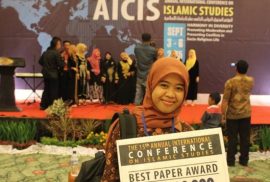
Maurisa Zinira, alumnus CRCS angkatan 2011 terpilih menjadi salah satu penerima Best Paper Award pada International Conference on Islamic Studies (AICIS) di Manado, 3-6 September 2015. Pada konferensi tahunan yang diselenggarakan oleh Direktorat Pendidikan Tinggi Islam (Diktis), Kementrian Agama Republik Indonesia ini, Maurisa mempresentasikan makalah berjudul “The Rupture of Brotherhood: Understanding JI-Affiliated Groups over ISIS”. Berikut hasil obrolan CRCS dengan Maurisa tentang papernya.
Wacana keislaman di Indonesia mutakhir sedang semarak dengan diskusi mengenai hubungan dialektis antara Islam, keindonesiaan, dan kemodernan. Mulai muncul kehendak untuk menghadirkan corak keislaman yang tak kehilangan identitas kebudayaan lokal, sekaligus bersifat kontekstual dan menzaman.
Setelah Reformasi 1998, dalam situasi transisi menuju demokrasi, Indonesia dikejutkan dengan makin maraknya konflik-konflik bernuansa agama dan etnis, dan beberapa di antaranya hingga memakan korban jiwa dalam hitungan ribuan. Demokrasi membuka saluran yang tersumbat selama beberapa dasawarsa sebelumnya, dan ternyata tidak otomatis membawa pada kedamaian dan kesejahteraan. Identitas agama dan etnis, khususnya, menjadi bahasa utama untuk membolisiasi massa. Apa yang pada periode Orde Baru diasumsikan sebagai “kerukunan”, sebagai ciri yang dibanggakan Indonesia sebagai masyarakat majemuk, ternyata tampak hanya seperti bangunan yang rapuh. Dan yang lebih penting, ternyata kita tampaknya belum sepenuhnya memahami kemajemukan Indonesia dan bagaimana mengelolanya.